


The global innovation economy remains largely defined by agglomeration dynamics. Worldwide, 19 ecosystems dominate the innovation landscape, increasingly concentrating innovation demand (corporates) and supply (scaleups) — attracting further growth capital (investors).

Meanwhile, other ecosystems struggle to achieve a meaningful presence on the global innovation map and are at serious risk of technological disruption and economic downfall.
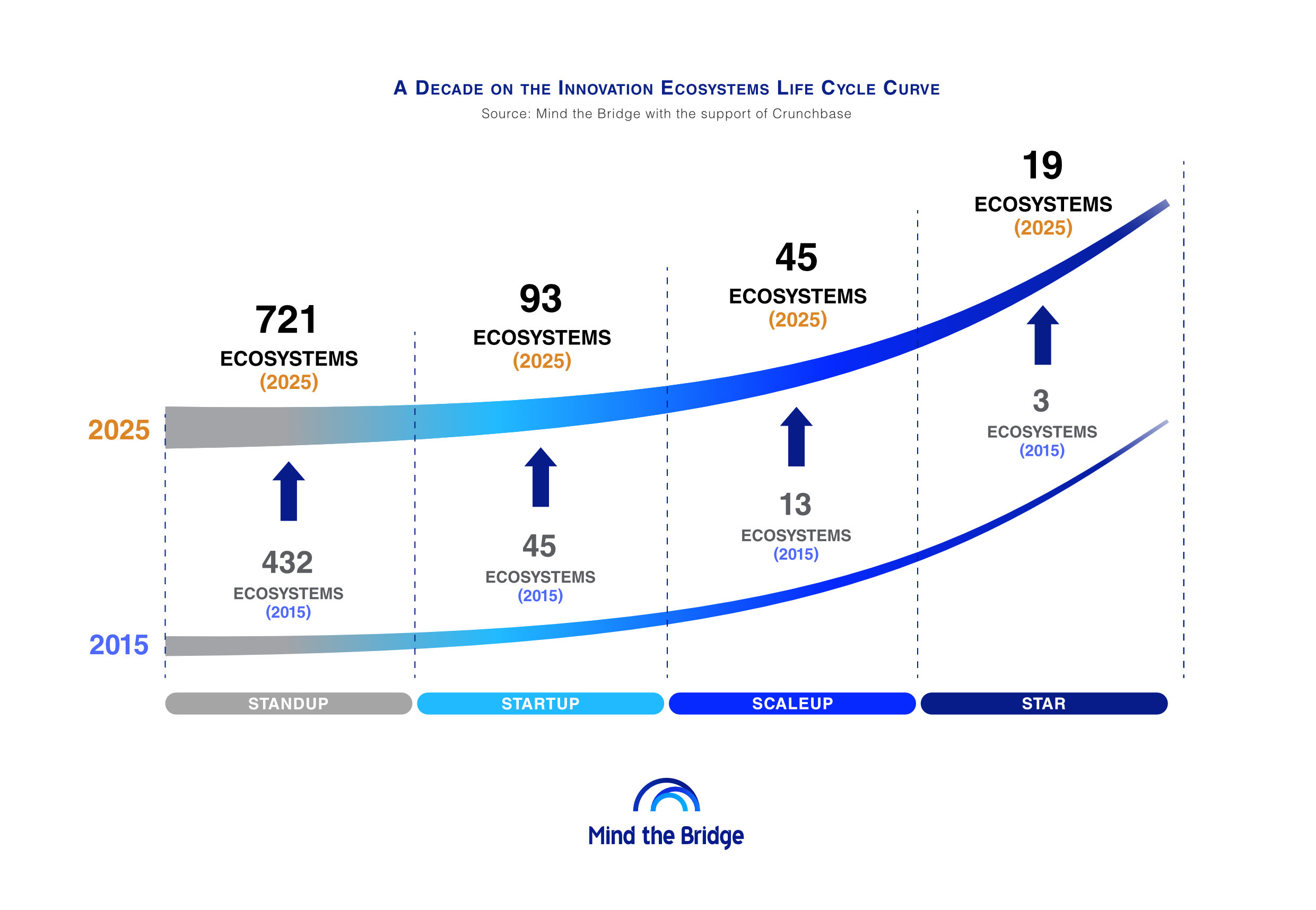
Yet something is happening below the surface. Over the past decade, the composition of the Global Innovation Ecosystems Life Cycle Curve changed dramatically, as the number of scaleup ecosystems worldwide has more than doubled.
The trend is not stopping just here: we expect these figures to even triple in the coming years.
In this new scenario, emerging innovation economies hold the potential for disrupting the agglomeration paradigm, toward a new scheme of interconnected networks of specialized local innovation hot spots.
Among them, there is also Africa. While the continent still lacks ecosystems at the most advanced stages of maturity, it now counts four ecosystems at the startup stage and 40 at the standup stage, compared with respectively 25 of those 10 years ago, according to a recent analysis of the African innovation landscape by my organization, Mind the Bridge, in collaboration with Terna and Crunchbase.
 Africa: the awakening giant of the coming decade?
 Africa: the awakening giant of the coming decade?
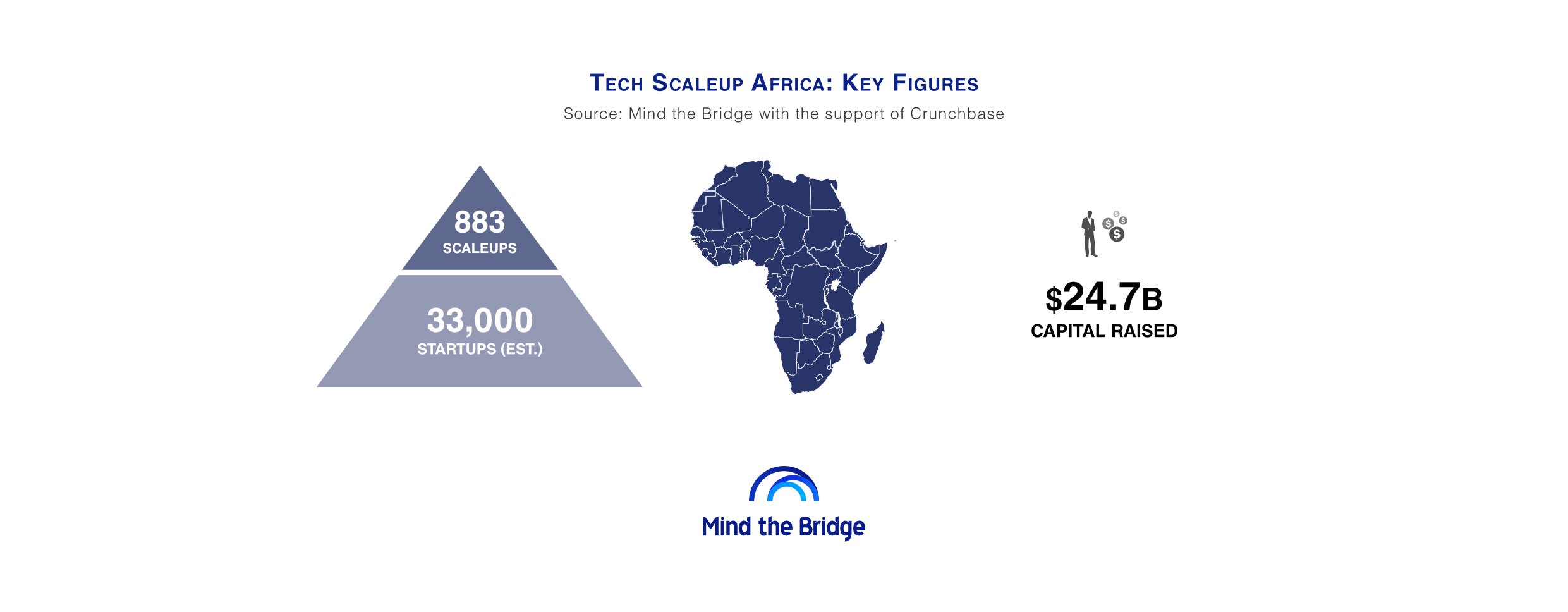
As of today, Africa’s innovation economy includes 883 tech scaleups that have raised a combined $24.7 billion. Despite this progress, the continent still represents only about 1% of global figures.
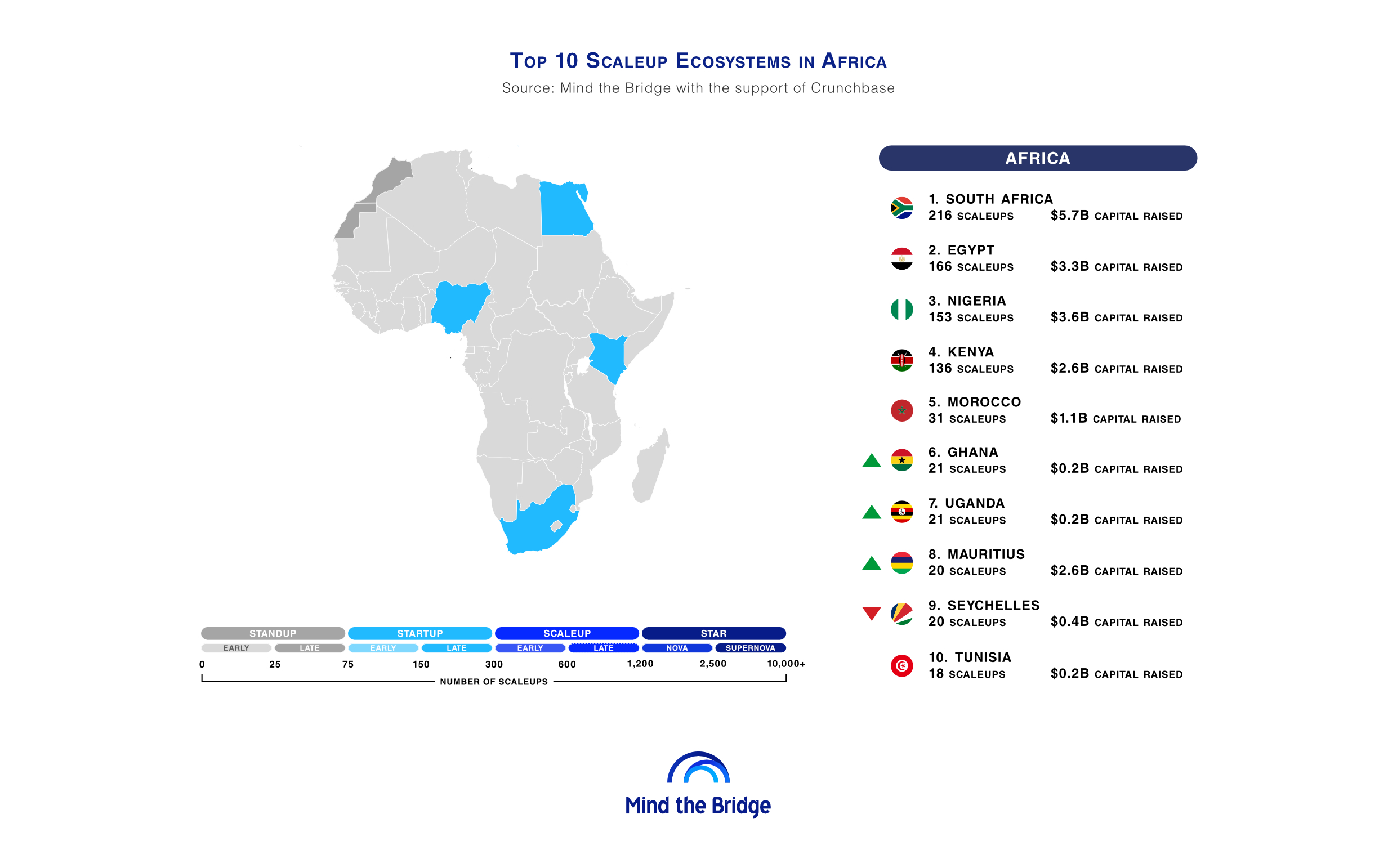
The African innovation landscape remains highly concentrated around four main hubs: South Africa, Egypt (North-East), Nigeria (West Africa) and Kenya (East Africa). The North-Western corner of the continent still lacks a dominant hub, although Tunisia, Morocco and Algeria remain the leading candidates.
A testbed for clean technologies?
Emerging innovation economies that thrive on the global innovation map typically build on top of highly specialized, unique local strengths.
Our recent analysis has identified clear evidence that Africa holds significant potential over the development of clean energy systems and technologies.
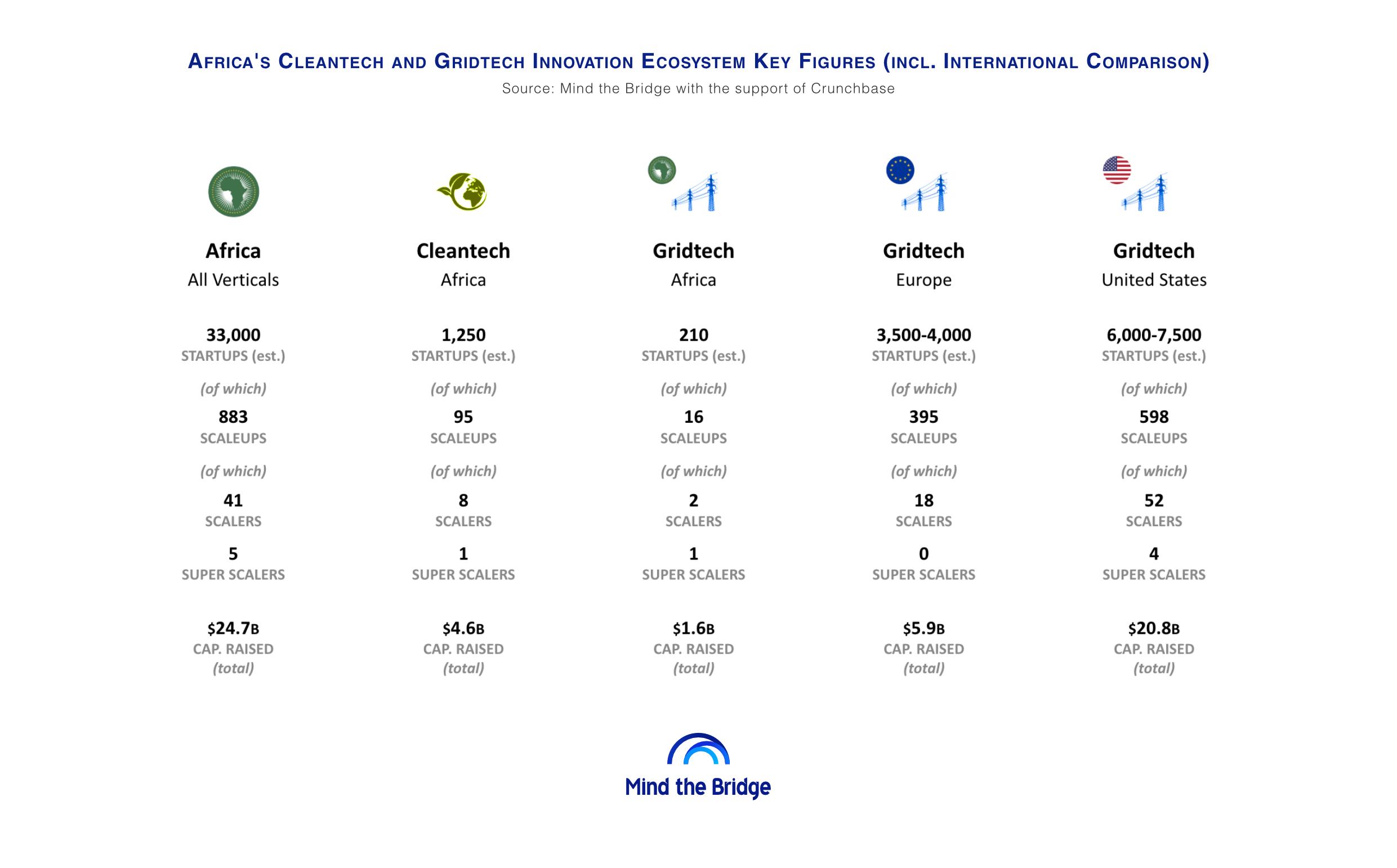
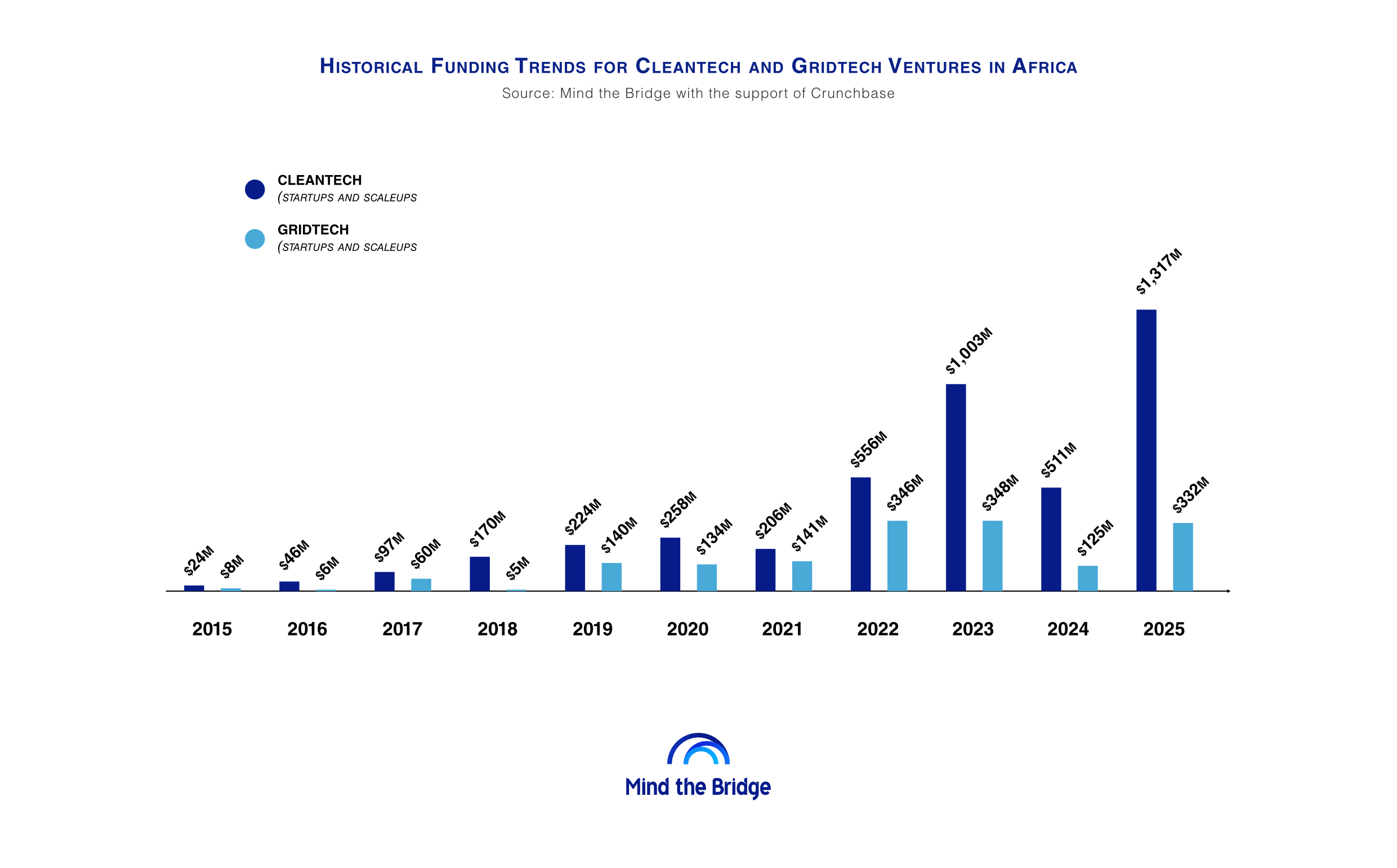
The relative prominence of the cleantech sector in Africa is evident from the data:
- Africa is home to 95 cleantech scaleups, representing roughly 11% of the total scaleup base.
- Collectively, they have attracted approximately one-fifth of all capital deployed to African ventures.
- Cleantech has also generated a disproportionate share of high-growth leaders, accounting for around 20% of both scalers (scaleups that raised more than $100 million) and super scalers ($1 billion-plus).
Within cleantech, a highly specialized vertical is also emerging, what we might call “gridtech”:
- It comprises 16 scaleups (17% of the cleantech total) and two scalers (25% of total).
- It has attracted around 30% of total cleantech funding.
- Africa’s sole cleantech tech giant, Kenya-based Sun King, operates within this gridtech vertical.
That said, the numbers still point to a gap.
The elephant in the room
The main challenge is the grid infrastructure deficit, which remains the primary bottleneck to scaling energy system technologies. As shown in the map below, Africa’s grid infrastructure is highly fragmented: High-voltage networks are concentrated in a few densely populated areas, while large parts of the continent remain largely disconnected.
As a result, grid infrastructure development and electrification are key to unlocking Africa’s growth — consider that Africa still accounts for only about 5% of global energy supply — and its innovation potential.
At the same time, the continent holds world-class renewable resources, including approximately 13% of global technical hydropower potential and around 60% of the world’s best solar resources.
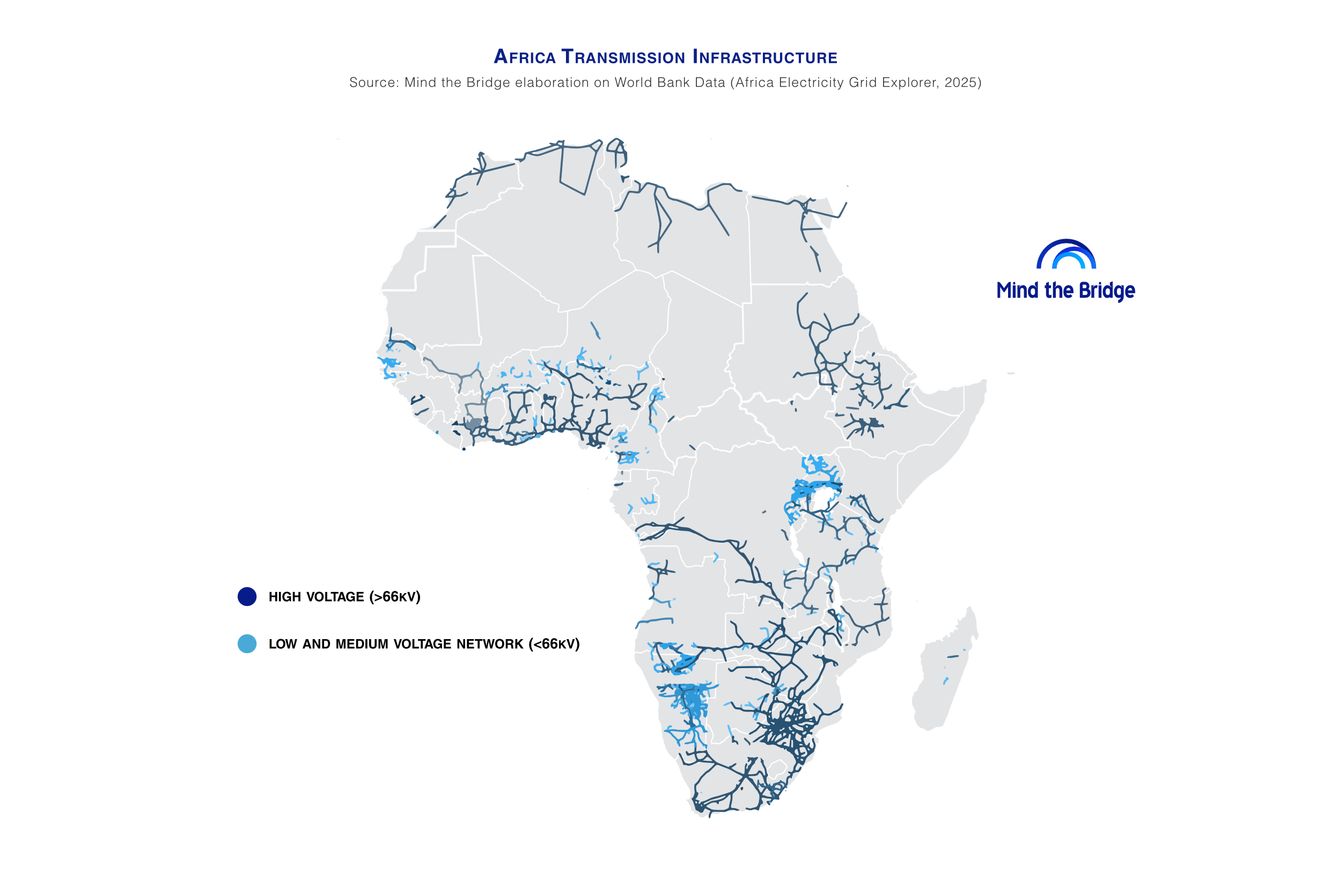
Africa’s energy system is expanding, but fully unlocking its economic and innovation potential will depend on accelerating electrification and strengthening grid infrastructure.
Blended finance will be critical to enable this growth. Both private and public capital are required: private capital drives innovation, while public finance enables foundational infrastructure such as grid expansion.
In particular, private capital needs to be complemented by structured public finance initiatives to address the inherent limitations of a relatively small domestic VC market, which remains heavily focused on early-stage investments.
Public capital will be essential for infrastructure development. In gridtech especially, public investors are expected to account for up to about 80% of total investments by 2030, reflecting the capital intensity and risk profile of grid infrastructure.
International capital still dominates the market, with approximately 69% of active investors originating outside Africa, underscoring continued reliance on foreign capital despite growing local participation.
Get the full story in our report: Innovating the Grid: Mapping Opportunities and Challenges Ahead – 2026 Report Africa
Alberto Onetti is chairman of Mind the Bridge and a professor at University of Insubria. He is a serial entrepreneur who has started three startups in his career, the last of which is Funambol, among the five Italian scaleups that have raised the largest amount of capital. He is recognized among the leading international experts in open innovation and has wide experience in setting up and managing open innovation projects — venture clients, venture builders, intrapreneurship, CVCs — with large multinational companies, as well as advising and training on this subject. Onetti has a column on Sifted (Financial Times) and several other tech blogs.
Photo by Road Ahead on Unsplash.
Stay up to date with recent funding rounds, acquisitions, and more with the Crunchbase Daily.



![Illustration of a guy watering plants with a blocked hose - Global [Dom Guzman]](https://news.crunchbase.com/wp-content/uploads/quarterly-global-3-300x168.jpg)

67.1K Followers